Business Introduction

Diagnostics Business
Since its founding, Sysmex has focused on in vitro diagnostics (IVD) that involve the collection and examination of blood, urine, and other samples, as its core business.
IVD is utilized in various ways, including medical checkups, disease diagnosis, determination of treatment methods, measurement of drug administration results, prediction of aggravation, and post-treatment monitoring.
Accurate test results are essential because they allow medical professionals to assess a patient’s state of health accurately and promptly, and to determine optimal treatment methods.
In the IVD business domain, Sysmex provides high-quality products and services to medical institutions, clinical laboratories, animal hospitals, and research institutes.
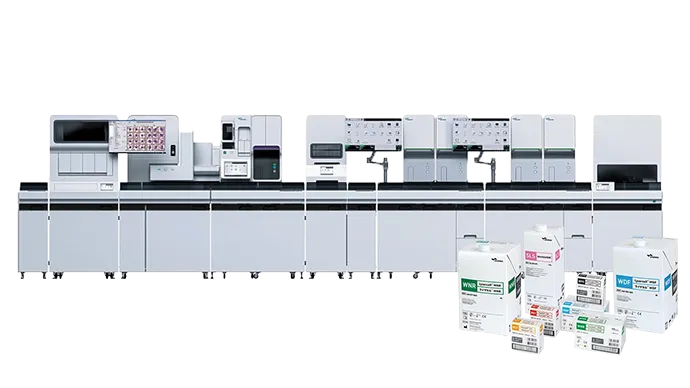
Hematology is a major test routinely included in blood tests. It analyzes the number, type, and size of red, white, and other blood cells. It also helps identify the possibility of diseases, such as anemia and leukemia, and can be employed to determine whether more detailed tests are required.
In the field of hematology as its main business, Sysmex has achieved the No. 1 share in the global market, supplying a wide range of products that can be used in any size of facilities.
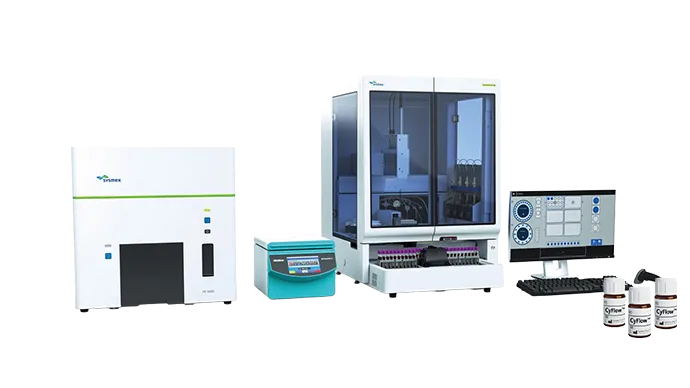
This test uses FCM technology to analyze cell properties by irradiating individual cells with a laser and measuring the intensity of light scattering and fluorescence. Applications span multiple domains: detailed analysis of leukemia, malignant lymphoma, HIV, and other diseases in the clinical domain; quality management of food and other products in the industrial domain; and research on cancer, regenerative cells, and more in the research domain. In North America, the world’s largest FCM testing market, Sysmex launched a sample preparation system in 2019 and a flow cytometer (for research use) in 2020, automating the entire FCM testing workflow from pretreatment through result generation. Going forward, we will expand global adoption and maximize synergies between hematology and FCM testing by leveraging the established workflow, in which detailed FCM testing is performed as a follow-up to hematology testing.
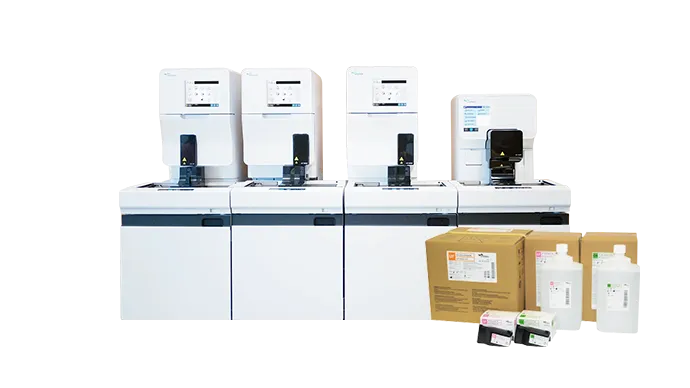
This test checks for the presence of glucose, proteins, and blood in urine. It is classified into urine chemistry testing, which serves as the primary test, and urine sediment testing, which is a secondary test conducted to further examine any detected abnormalities. It is used for the diagnosis and treatment of renal diseases and urinary tract disorders.
We developed and commercialized the world’s first automated urine particle analyzer using flow cytometry technology, making a significant contribution to the streamlining and standardization of testing. We have also expanded our lineup to meet diverse urinalysis needs by leveraging alliance partnerships to incorporate urine chemistry testing products into our portfolio. Through these sustained efforts, we have achieved the leading share of the global urinalysis market.*
- *Includes sales through alliances
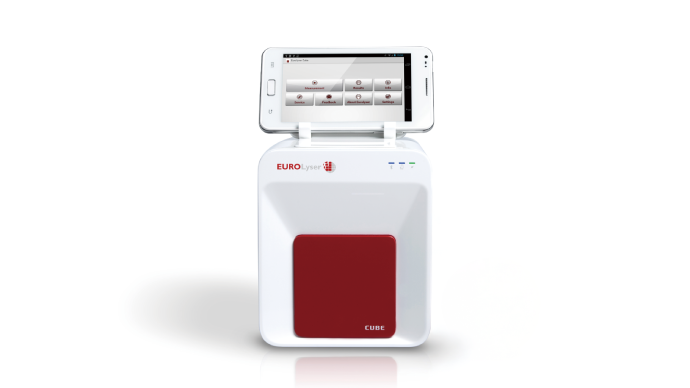
This test examines the condition of organs involved in digesting and absorbing nutrients and excreting waste products (metabolism) by analyzing components in the blood such as glucose, lipids, and proteins.
This is one of the fundamental screening tests essential for the initial diagnosis of lifestyle-related diseases, infectious diseases, and the assessment of liver and renal function.
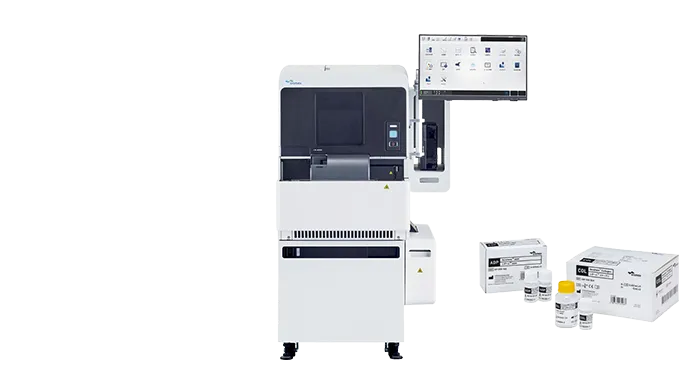
Hemostasis, a type of testing that helps determine the ability of the blood to coagulate and dissolve clots, is used when diagnosing and treating hemorrhagic diseases, such as hemophilia, and thrombotic diseases, such as myocardial and cerebral infarction.
In addition to our global OEM contract with Siemens Healthineers, we are collaborating with our group company, HYPHEN BioMed, to develop products with high clinical value, achieving the No. 1 share in the global market.*
- *Includes sales through alliances
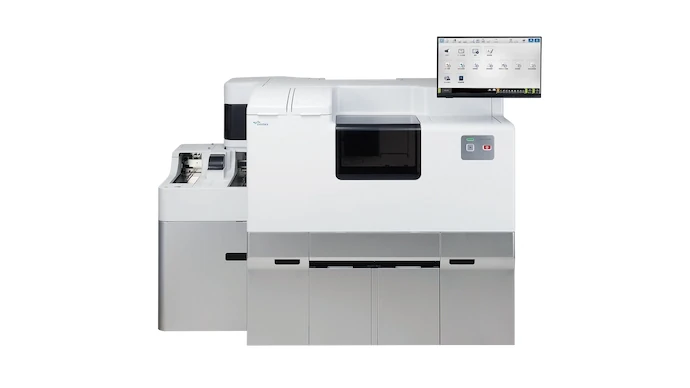
Immunochemistry analyzes proteins in the blood to check for infectious diseases, such as viral hepatitis and COVID-19, tumor markers that indicate cancer development, hormones, and allergies.
Sysmex’s products can measure minute amounts of blood components quickly and sensitively, resulting in shorter waiting times for test results. Furthermore, we are developing new test products, such as reagents for examining the accumulation of proteins responsible for Alzheimer's disease with a small amount of blood.
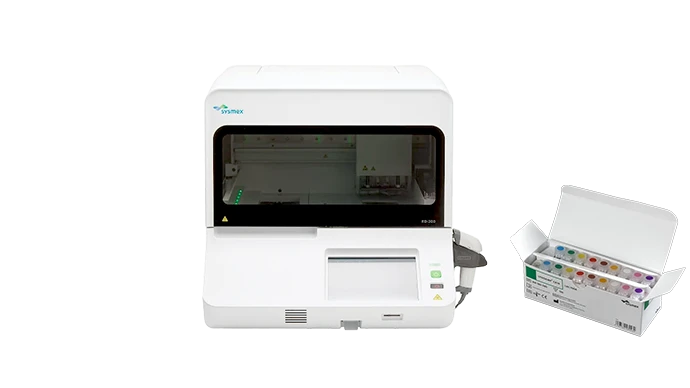
Through the detection and analysis of cancer genes, this testing contributes to decisions on treatment protocols and drug administration. Using our proprietary technology, the OSNA method, we provide a system that automatically and easily detects information to assist in diagnosing lymph node metastasis.
In 2020, we entered the Chinese market.
We have developed a system for use in cancer gene profiling in collaboration with the National Cancer Center Japan. The system’s targets for analysis are solid tumors. By obtaining a comprehensive cancer genomic profile of tumor tissue, the system analyzes abnormalities in cancer-specific genes in patients to provide information that is useful in determining treatment methods, including diagnoses and the selection of anti-cancer drugs. In 2019, this became the first such system to be covered under Japanese health insurance to be used in clinical settings.
- Related information
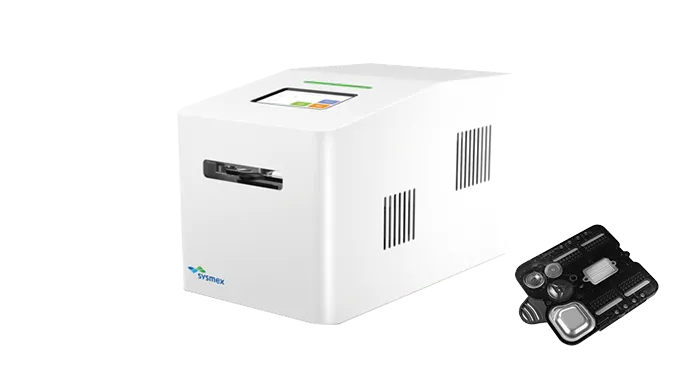
This test examines the effectiveness of various antibiotics against pathogens detected in samples. In 2023, Sysmex launched a rapid antimicrobial susceptibility testing system in Europe. The system uses urine samples from patients with suspected urinary tract infections to check for the presence of bacteria and assess antibiotic effectiveness. This system delivers test results in as little as 30 minutes, compared with the several days that were previously required. This assists the appropriate use of antimicrobials during initial patient visits at clinics and other primary care settings.
In June 2024, Sysmex Astrego AB won the Longitude Prize on AMR, one of the UK’s most significant scientific awards.
- Related information

Caresphere is an ICT solution designed for medical professionals, including physicians and medical laboratory professionals. We have built a platform that integrates and analyzes in real time various data managed through testing instruments and clinical testing information systems, supporting the efficient operation of clinical laboratories. Specifically, it comprises multiple applications, including external quality control tools, a service that remotely monitors instrument operating status and test volumes, as well as educational tools. This platform supports quality control and operational efficiency in laboratories, while also helping to reduce the burden on medical settings and improve customer satisfaction through instrument maintenance and remote support.
Medical Robotics Business
In recent years, it has become common to perform minimally invasive laparoscopic surgery to reduce the physical burden on patients. However, this surgery requires a high degree of technical skill, and surgical support robots that complement these skills are attracting attention from medical workers.
Currently, insurance coverage of surgical procedures using these robots has been extended to include urology, gastroenterology, and gynecology, and the number of surgeries performed using surgical support robots is gradually increasing.
In addition, from the viewpoint of improving access to medical care, such robots are being considered for use with remote medicine. It may not be long before surgeries can be performed with doctors and patients in different locations.
Under these circumstances, Medicaroid Corporation, a joint venture between Sysmex and Kawasaki Heavy Industries, Ltd., developed the Japan-made robotic-assisted surgery system. As the global general distributor for this product, Sysmex began its launch in Japan in 2020.
We are also promoting expansion in overseas markets, with a primary focus on the Asia Pacific regions.
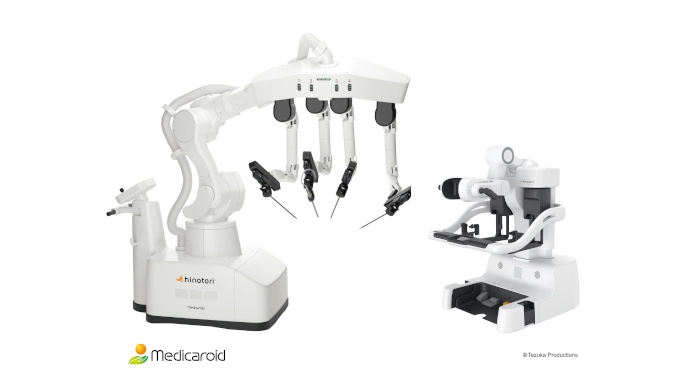
Compact enough to fit in standard Japanese operating rooms, this system is equipped with user-friendly robot arms and a high-definition 3D videoscope.
Furthermore, the system has been designed to be network compatible, to support more accurate treatment by medical workers.