The Basics of In vitro Diagnostics
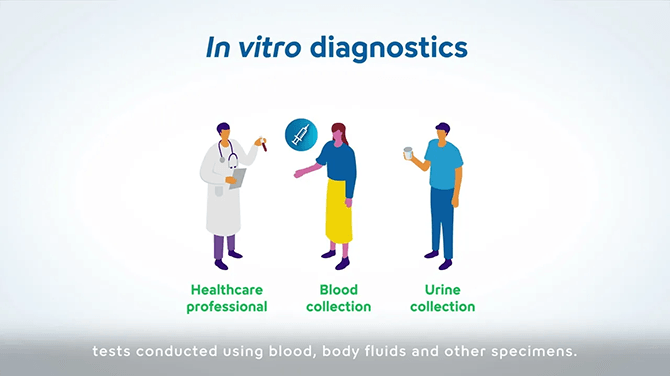
Blood contains a variety of information, and in vitro diagnostics is an essential barometer that can be used to manage our health.
This page introduces what in vitro diagnostics tells us and some basic information about blood.


The Objectives of In vitro Diagnostics
- Early-Stage Detection of Illness
In vitro diagnostics is used for the early-stage detection of illness, including anemia, leukemia and other organ disorders.
- Determination of Treatment Methods
Determining the elements present in the blood and their quantity provides useful information that allows for the diagnosis of diseases and the determination of their treatment plans.
- Confirmation of Treatment Status
In vitro diagnostics is useful in performing follow-up assessments on diseases under treatment and the confirmation of treatment results.
The Workflow of In vitro Diagnostics
In laboratories found in hospitals and other medical facilities, blood, urine, and other specimens are examined to diagnose and treat diseases.
Example: Blood Testing Workflow
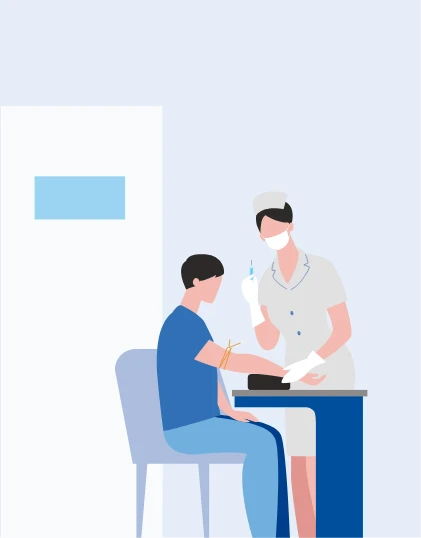
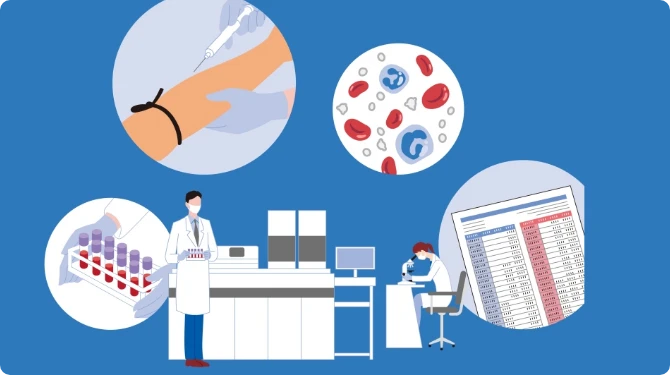
Blood samples taken from the body are measured using instruments and reagents to determine if more detailed testing is necessary. If more detailed testing is determined to not be necessary, the results are reported as is to the physician.
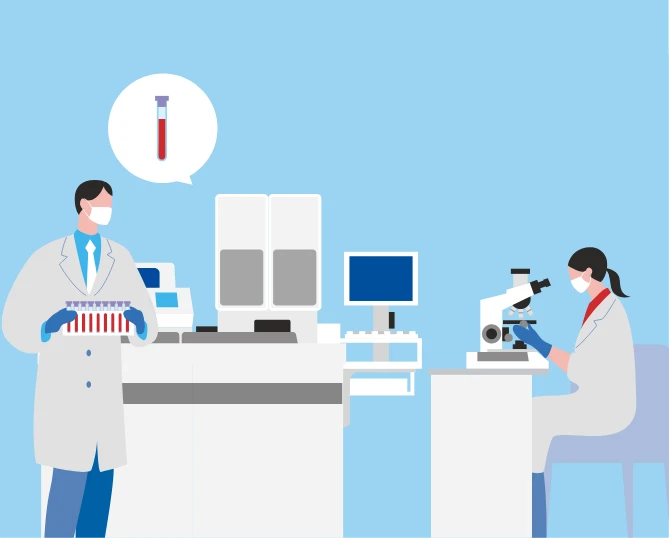
In case more detailed testing is necessary
If the first analysis indicates that more detailed testing is necessary, a blood smear may be prepared to observe the shape of blood cells, which can be observed by a medical technologist using a microscope. Expert skills are required to detect cell abnormalities under the microscope. This test can also be measured using an instrument.

The physician receives the results. Advancements in technology, implemented in the instruments, have enabled more detailed analysis to be performed and additional information reported to assist in the diagnosis.
As with blood testing, urinalysis involves measuring a collected urine sample using instruments, urine test strips, and diagnostic reagents at the laboratory. The results are then delivered to the physician along with information useful for diagnosis.
What We Learn from In vitro Diagnostics
In vitro diagnostics requires instruments and reagents. Sysmex provides customers the necessary instruments and reagents needed to conduct a variety of blood tests.

Testing to determine the number, type and size of red, white and other blood cells. It helps determine if further detailed testing is needed.
○Related diseases
Anemia, leukemia, thrombocytopenia, malaria, etc.

This test checks for the presence and quantity of glucose, proteins, and blood in urine.
〇Related diseases
Kidney disease, bladder, ureteral, and urethral conditions, diabetes, etc.

Determining the status of organs involved in the digestion and absorption of nutrients and elimination of waste material (metabolism) by testing to determine the presence in the blood of substances such as sugars, fats and proteins.
○Related diseases
Diabetes, arteriosclerosis, liver dysfunction, kidney dysfunction, etc.

Testing to determine the activity of blood clotting or coagulating at a wound entrance (thrombus) or dissolving. These are important indicators for surgery and drug administration.
○Related diseases
Thrombosis, thrombotic disease (myocardial infarction, cerebral infarction), hemophilia, etc.

Testing to determine the status of action (immunity) to remove viruses, cancer cells or other abnormal cells from the body, thereby determining causes and types of illness and symptomatic states.
○Related diseases
Infectious diseases (hepatitis, AIDS, COVID-19), cancer, allergies, etc.

Through the detection and analysis of genes, this testing contributes to decisions on optimal treatment methods and drug administration to individual patient characteristics.
○Related diseases
Cancer, etc.
Advancement of Personalized Medicine
- Aiming toward the selection of treatment methods optimized for individual patients
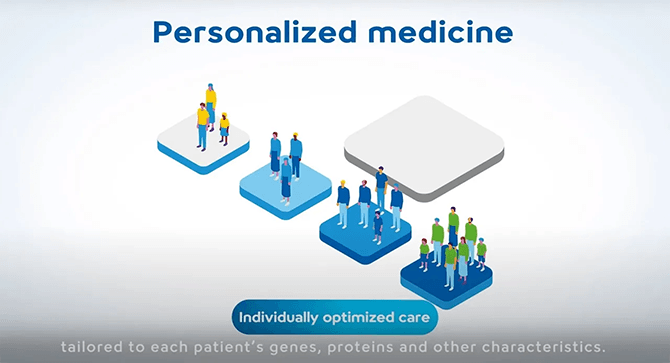
Disease states differ by person, so it is understood that the same treatment method may not be appropriate even for people with the same disease. In recent years, progress in genetic analysis technology has made it possible to determine optimal treatment methods for individual patients. Selecting the optimal treatment methods can help reduce the physical burden on patients, as well as curtail medical expenses.
- Initiatives with a view to personalized medicine
To provide treatments that are optimized for individuals, Sysmex is working in a variety of domains, including cancer and chronic diseases, on research and technological developments toward the creation of highly valuable testing and diagnostic technologies. We are working to establish testing method that will enable liquid biopsies, which would allow testing for cancer and other diseases using blood and body fluids.
Blood contains a variety of information serves as a barometer of our health.
This page introduces details about blood.
What is Blood?
Blood contains a variety of information, and In vitro diagnostics is an essential barometer that can be used to manage our health.
For these reasons, when the body is ill, In vitro diagnostics can be used to determine the illness, and In vitro diagnostics is regularly used for medical checkup at workplaces and in schools.
The Blood in Your Body
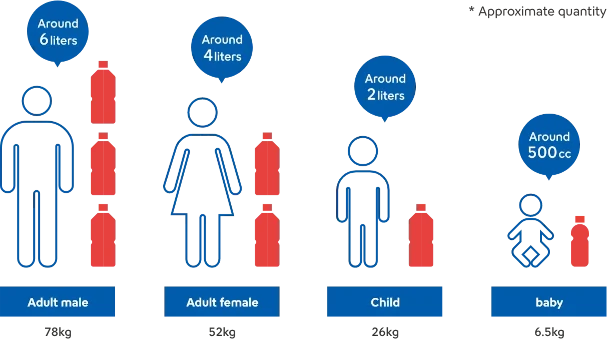
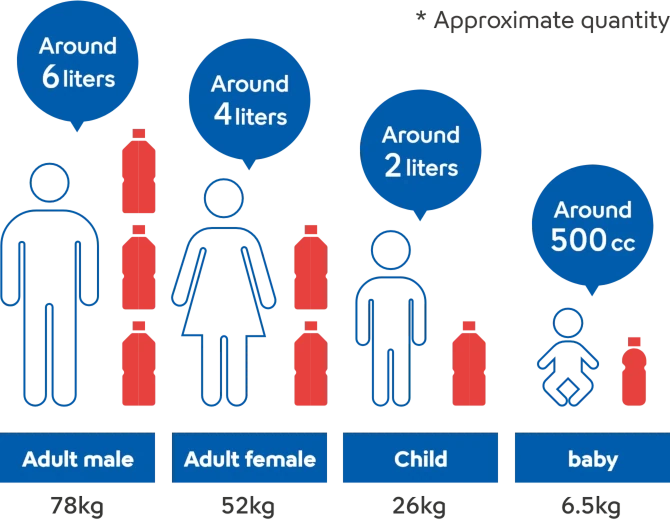
Blood makes up about 1/13th of the body. An adult has enough blood in his or her body to fill two or three two-liter PET bottles.
If the blood vessels in your body were all laid out end to end, they would stretch around 100,000 kilometers, enough to circle the earth 2.5 times.
The Three Roles of Blood
First, blood plays a major role in providing transport. In addition to oxygen and carbon dioxide, it transports nutrients, hormones and immune substances and plays a role in eliminating waste material from the body.
- Transport of oxygen and carbon dioxide
- Transport of nutrients, hormones and immune substances
- Elimination of waste material
Blood helps remove bacteria and other foreign matter from the body, and when an injury results in bleeding, blood helps to stop the bleeding. The body works to minimize the amount of bleeding and maintain life by retaining a certain amount of blood.
- Removing foreign matter(removing bacteria and other pathogens)
- Clotting (stopping bleeding)
Blood helps to spread the heat the body generates throughout the body, adjusting its temperature, and plays a role in maintaining the body’s environment in other ways.
- Maintaining osmotic pressure *1
- Maintaining pH *2
- Adjusting body temperature
*1 The osmotic pressure of blood and tissue fluid maintains a state of equilibrium. If the osmotic pressure balance is disrupted, causing osmotic pressure to fall, water from the blood can move into the tissues, causing swelling.
*2 Blood is slightly alkaline, with a pH near 7.4. A blood pH below 7.4 is referred to as acidosis, while a higher level is called alkalosis. If severe, life can be endangered.
What Are Blood Cells?
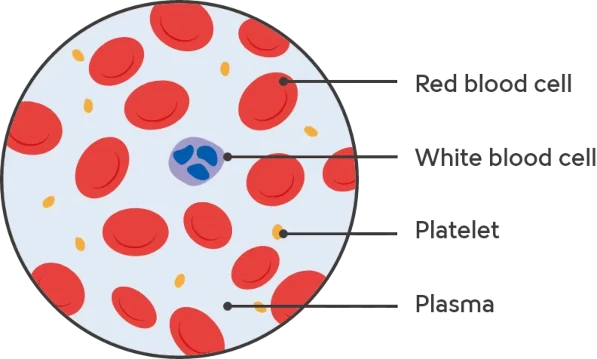
If you look at a blood sample in a microscope, you will see that it has a variety of constituents.
Blood contains red blood cells, white blood cells, platelet cell constituents, nutrients and hormones, as well as the plasma (around 90% water) that transports waste materials.
- Transporting oxygen and carbon dioxin
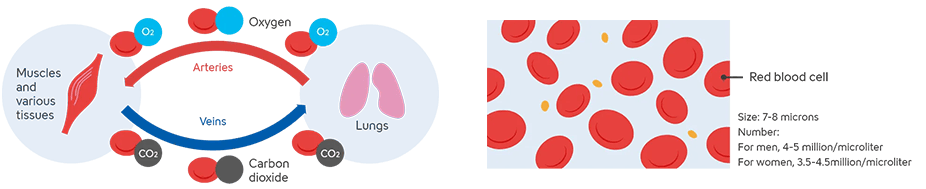
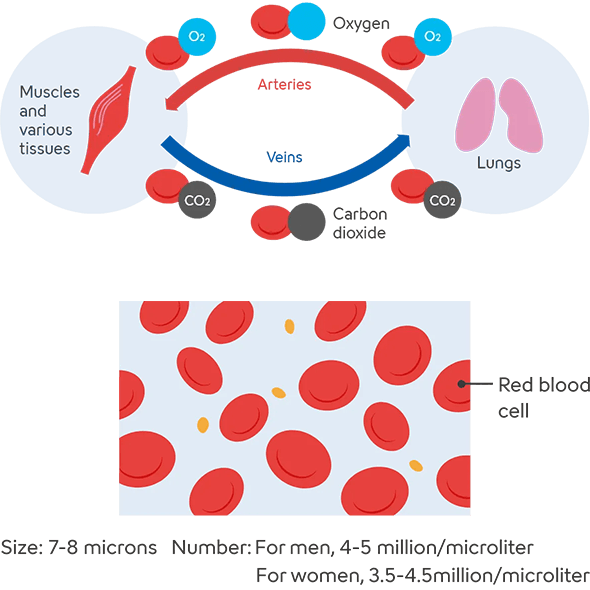
Red blood cells are the largest component, accounting for around 96% of the total number of cells.The red color of blood comes from the pigmentation of hemoglobin, which attaches to and detaches from the oxygen carried by red blood cells. Red blood cells play the role of transporting oxygen and carbon dioxide among the lungs and various tissues.Measuring the size of red blood cells and the amount of hemoglobin allows for the type and quality of anemia to be determined and the cause to be inferred.

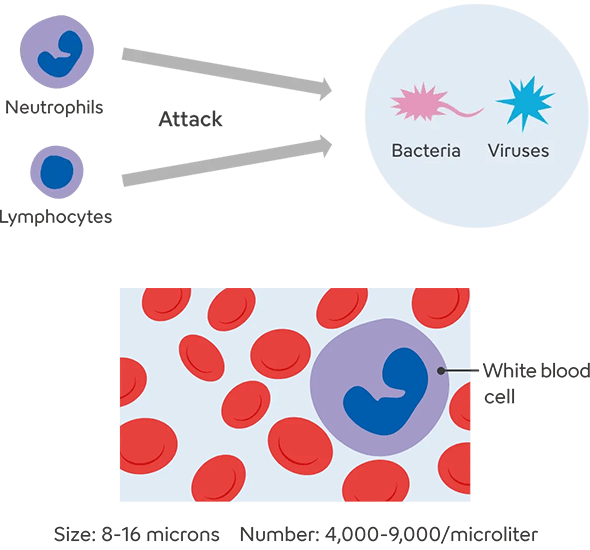
- Attacking bacteria and viruses, and preventing infections
Measuring the number of white blood cells (number by type, such as neutrophils and lymphocytes) enables determination of abnormal changes in the body, such as inflammation, viral infections or leukemia.This also helps in diagnosing allergies and infectious diseases.

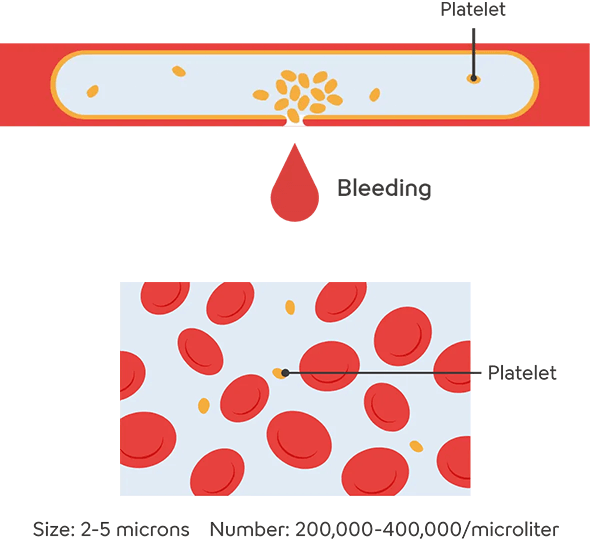
- Stopping bleeding
Platelets plug holes in blood vessels caused by injury and help restore them to their former state. During an injury, platelets work to prevent holes by forming a crust.Measuring the number of platelets allows for diagnosis of the mechanism to stop bleeding.
In these ways, blood cells play important roles in maintaining vital activity in the body.
When abnormal changes occur in the body, those changes are reflected to blood cells and other constituents, so a drop of blood contains a host of information. In vitro Diagnostics is regularly conducted at hospitals, in the workplace and at schools, where it plays a role in the early detection of abnormal changes in the body.
Sysmex supports in vitro Diagnostics, which plays a key role in health maintenance and the diagnosis and treatment of illness.
Blood Trivia


Red blood cells are produced at a rate of 200 billion per day.
This is because old red blood cells are constantly broken down and replaced by new ones in the body.
Red blood cells play a vital role by carrying oxygen absorbed in the lungs to cells throughout the body, and transporting carbon dioxide released from cells back to the lungs.


White blood cells can move out of blood vessels to fight viruses.
White blood cells are immune cells that defend the body against invading bacteria and viruses.
When foreign substances enter the body, white blood cells travel to the affected area, changing their shape like amoebas to pass through gaps in blood vessel walls and move outside the vessels.